Showing posts with label minakami. Show all posts

Tuesday, 5 January 2010

XLVII - Jōmō-Kōgen


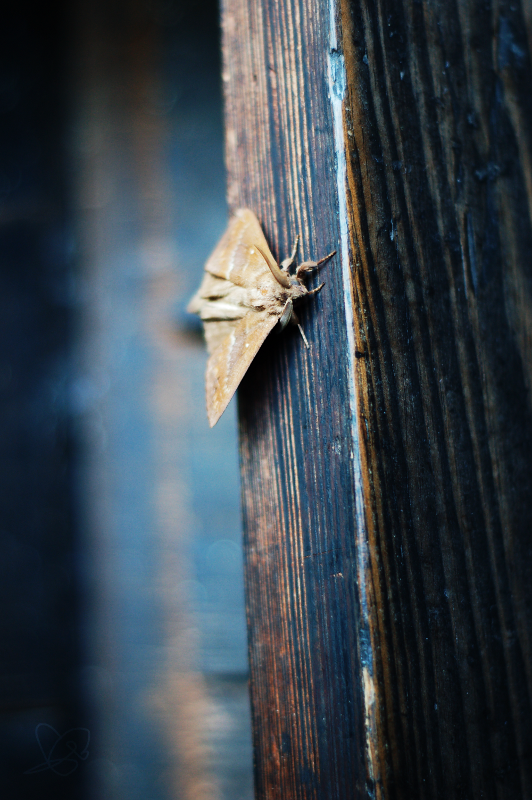
Several large ga (蛾 - "moth") seemed to enjoy the house as much as I did.

Monday, 4 January 2010

XLVI - Jōmō-Kōgen


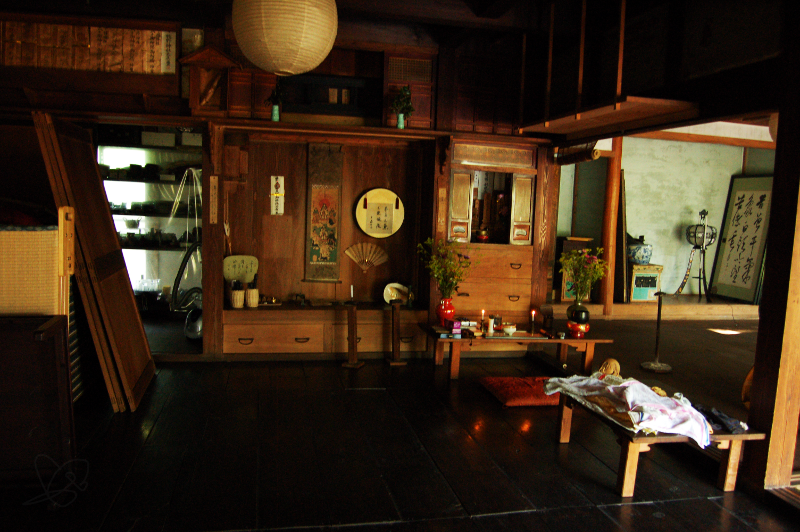
A corner of the main room of the traditional house. There is a butsudan (仏壇 - "Buddha's altar"), in front of which practicing Buddhists light incenses and leave food offerings. The religious items contained withing a a butsudan are called butsugu (仏具 - "Buddhist altar equipment"), and consist of candlesticks, incense burners, and bells among others. Some people also place memorial tablets called ihai (位牌 - "spirit tablet") in their butsudan.

Saturday, 2 January 2010

XLV - Jōmō-Kōgen


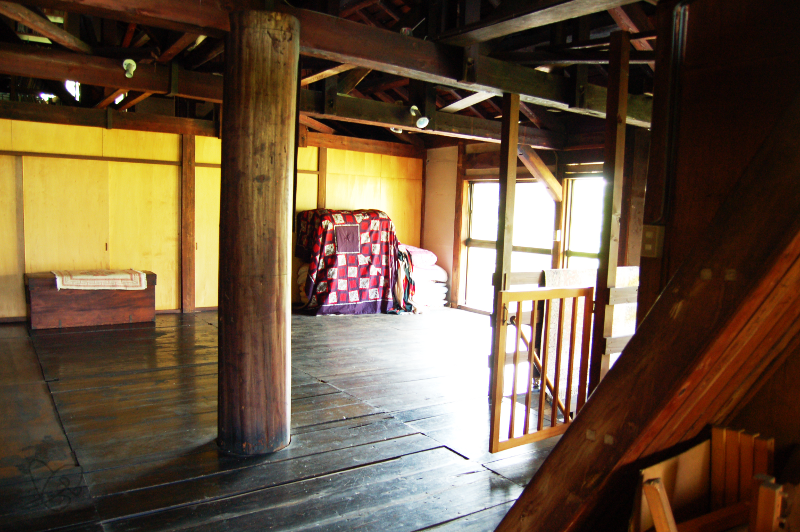
A view of the first floor of a Japanese traditional countryside house. This floor was initially used to process silkworm cocoons. There is no ceiling ― the rafters and the structure of the roof can be seen - and the windows on the side walls have only been added in recent years.

Friday, 1 January 2010

XLIV - Jōmō-Kōgen


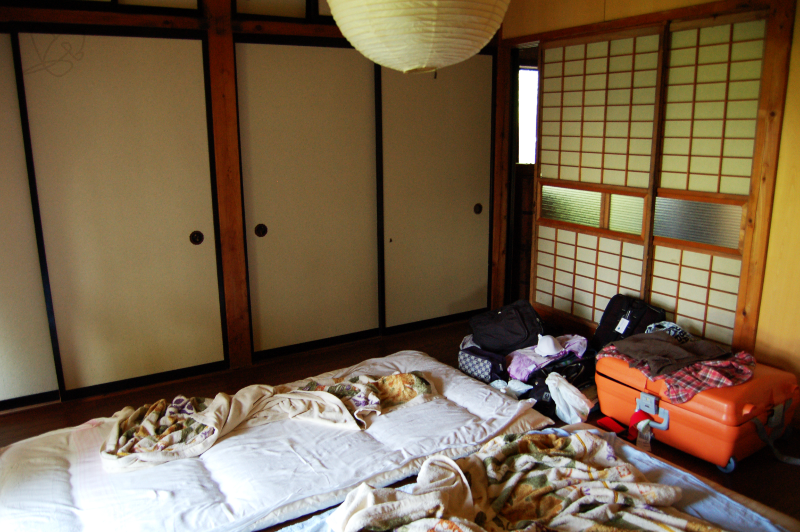
Pardon the mess!

Another of the elements which characterize Japanese rooms, other than shōji doors and paper lanterns, are oshiire (おしいれ - "closet").

Oshiire
are built-in closets which are used to store any bedding which is used at night-time, to keep the room free during the day. This is because Japanese houses usually have very minimal furniture and do not have rooms specifically intended for a purpose like we do (e.g. dining room, living room, bedroom), but each room can serve multiple purposes, according to what items are placed on the tatami (畳, "mat").

The futon (布団 - "padded mattress") which can be seen on the floor have been carefully folded and stored away after breakfast, along with the taoruketto (たおるけっと - "large towel") which is used as a blanket during the humid summer and the makura (枕 - "pillow"), a surprisingly comfortable pillow filled with beans or buckwheat chaff.

I can honestly say I have seldom slept as comfortably as on that futon.
Friday, 13 November 2009

VII - Jōmō-Kōgen


Growing up in an apartment in a big city, one is immediately taught to never leave windows open and always lock doors.

You might therefore expect that sleeping in a house which doesn't have a single door (yet alone a lock!) might feel weird, but it somehow doesn't. In fact, shōji (障子 - paper sliding panels) are almost poetical. At night-time, every whisper, every fluttering of tiny wings, every creak of the floorboards can be heard; during the summer, the crickets are so loud it almost feels like you're sleeping in the fields, under the sky.

Thursday, 12 November 2009

VI - Jōmō-Kōgen


I was lucky enough to have the opportunity to stay in a traditional Japanese home near the station of Jōmō-Kōgen (上毛高原), which is in the area of Minakami. I am very grateful to my host for allowing me to stay in her beautiful wooden house!

This is a detail of the ceiling in my room.

V - Gunma Prefecture


Minakami (水上町) is a town located in the northernmost part of the Gunma Prefecture (群馬県), about an hour by shinkansen from Tokyo. It's in a beautiful valley surrounded by mountains, woodland and rice paddies. The area is well-known for its ski resorts, and for the great number of onsen (温泉), both indoor and outdoor, which can be found there. During the summer months the weather remains cool, and bathing in one of the many rotemburo (露天風呂 - oudoor bath) beside a mountain brook at sunset is one of the best experiences which can be had.