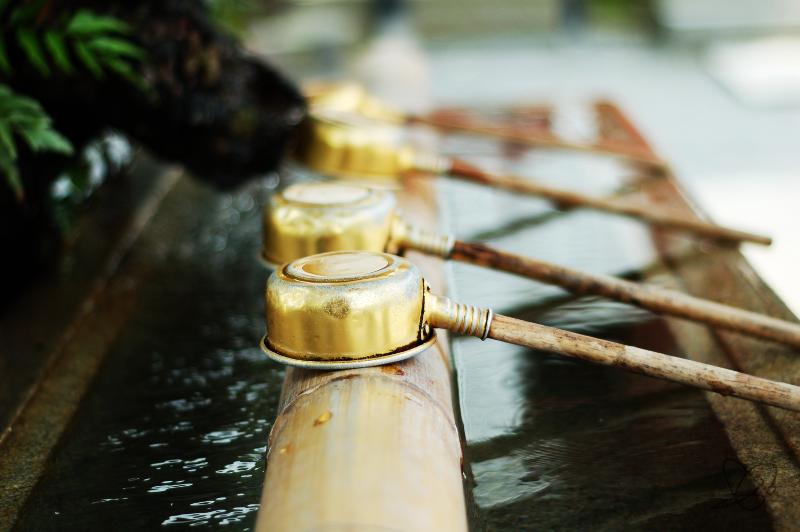
The temizu fountain in front of Benten-do (弁天堂) Temple, dedicated to the Buddhist goddess Benzaiten (弁才天), the goddess of everything that flows: water, words, speech and music. This worship hall is very appropriately located on a small island between the three sections of Shinobazu no Ike (不忍池 - "Shinobazu Pond"): Hasu no Ike (蓮の池 - "Lotus Pond"), Bōto no Ike (ボートの池 - "Boat Pond"), and U no Ike (鵜の池 - "Cormorant Pond").
Showing posts with label shinobazu-no-ike. Show all posts
Monday, 18 January 2010
LVIII - Tokyo
The temizu fountain in front of Benten-do (弁天堂) Temple, dedicated to the Buddhist goddess Benzaiten (弁才天), the goddess of everything that flows: water, words, speech and music. This worship hall is very appropriately located on a small island between the three sections of Shinobazu no Ike (不忍池 - "Shinobazu Pond"): Hasu no Ike (蓮の池 - "Lotus Pond"), Bōto no Ike (ボートの池 - "Boat Pond"), and U no Ike (鵜の池 - "Cormorant Pond").
Friday, 15 January 2010
LVII - Tokyo
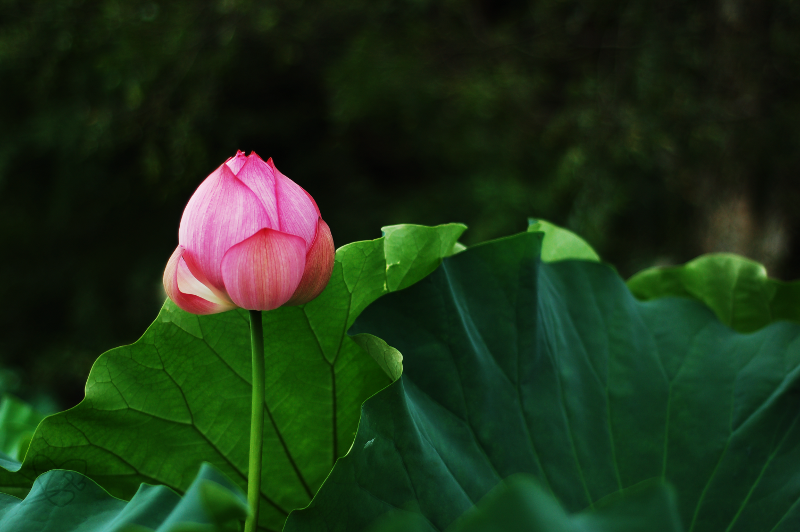
Renge (蓮華 - "lotus flower") blooms in midsummer, and is a symbol of truth, perfection and immortality.
It also represents Buddha's life, since it is born in the world which is full of problems and darkness (the mud in the pond), and grows to be pure and and unsullied ― it represents the awakening to the spiritual reality of life. Renge was also thought to be able to regenerate by itself, and because of this it is often shown as the throne upon which the Buddha sits, as a symbol of an awakened Mind.
Thursday, 14 January 2010
LVI - Tokyo
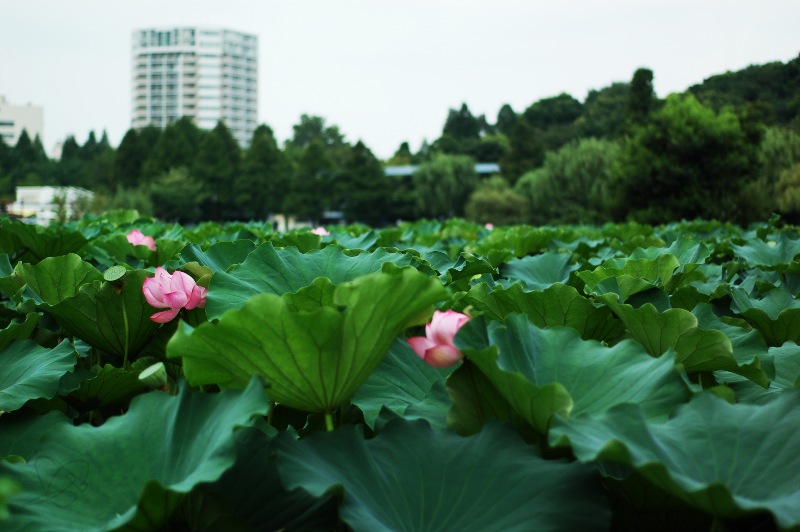
A view of Shinobazu no Ike (不忍池), ,the lake in Ueno Park, which by midsummer is completely covered in lotus flowers.
Subscribe to:
Posts (Atom)