Ema (絵馬) are another popular object which is always present in close proximity of Shinto shrines. They are small wooden tablets on which prayers and wishes are written by worshipers, and are then hung from special racks, often near the omikuji. Their surface can either be plain or inscribed with kanji (such as 願意, "wish"), pictures of animals, flowers, or anything else the shrine they belong to is famous for. The image on the ema may explain what it will be most effective for (health, money, love, study, etc), and larger temples often carry more than one kind.The price for an ema is approx. 2000円.
Showing posts with label rinno-ji. Show all posts
Saturday, 21 November 2009
XV - Nikko
Ema (絵馬) are another popular object which is always present in close proximity of Shinto shrines. They are small wooden tablets on which prayers and wishes are written by worshipers, and are then hung from special racks, often near the omikuji. Their surface can either be plain or inscribed with kanji (such as 願意, "wish"), pictures of animals, flowers, or anything else the shrine they belong to is famous for. The image on the ema may explain what it will be most effective for (health, money, love, study, etc), and larger temples often carry more than one kind.The price for an ema is approx. 2000円.
Thursday, 19 November 2009
XIV - Nikko
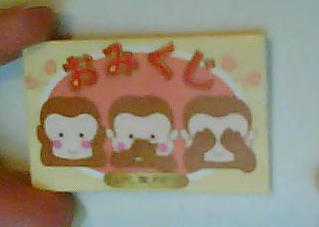
Omikuji (おみくじ, "sacred lottery") are strips of white paper on which random fortunes are written. They can be found in most temples or shrines, and are an important part of the average Japanese temple-going experience. The strips of paper, folded into small rectangles, can be found in open boxes in the temple area, alongside a box for donations (usually anything between 5~100円). The wrapping paper comes in many different colours, and there are different methods for choosing one, the open box from which to pick being just the first I encountered (and probably the simplest). While looking at all the different omikuji, one particular wrapping caught my eye: the one with the three cute monkeys (which are also the symbol of Nikko). So I picked one from that box, unravelled the paper and ― wow! I found dai-kichi (大吉), great blessing, which apparently is the greatest luck! My host told me she never was lucky enough to find one herself, so it must be quite a rare event. There are 12 possible outcomes, ranging from great blessing to great curse. When the prediction is negative, it is a custom to tie the paper to either a tree branch or a rope on the temple grounds, in the hopes that the bad luck will also be left behind.
Needless to say, I didn't tie mine anywhere.
Wednesday, 18 November 2009
XIII - Nikko
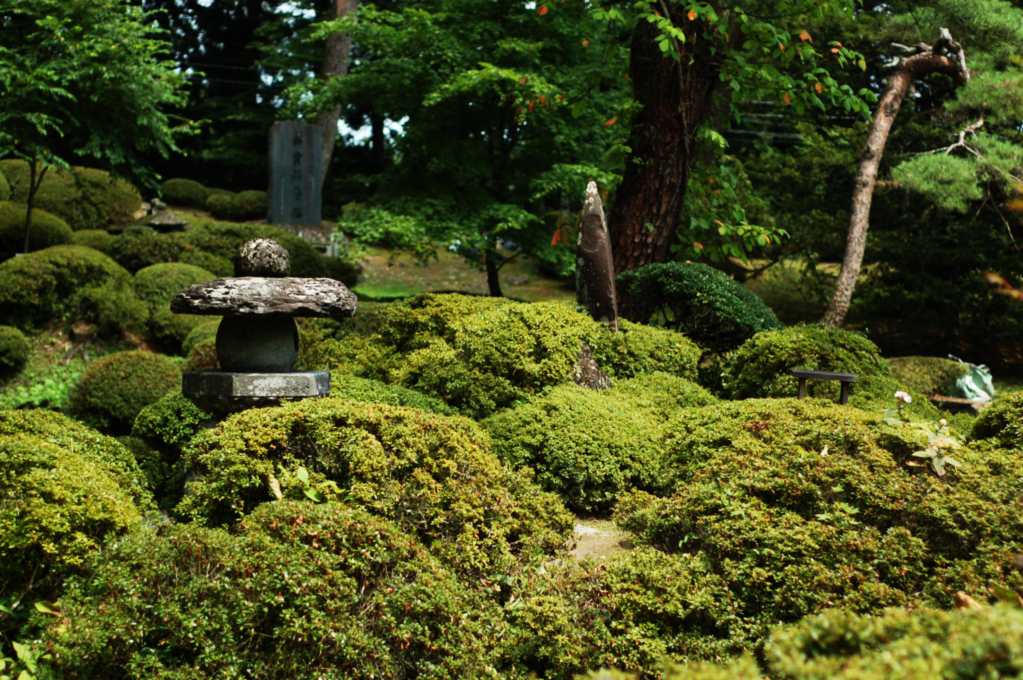
The Nights Who Say Ni would be ever so envious of Japanese shrubberies ― the temple gardeners always manage to make the tops perfectly domed, and not a leaf is out of place.
Tuesday, 17 November 2009
XII - Nikko
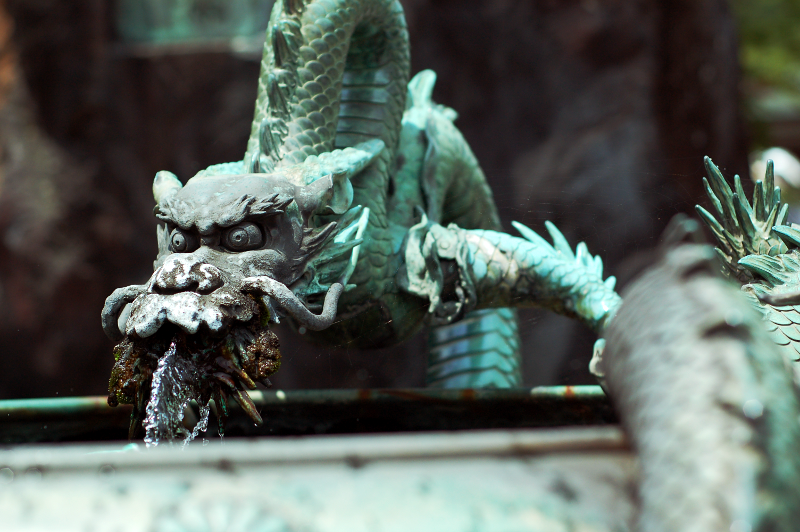
This is the fountain in front of Rinno-ji temple.
XI - Nikko
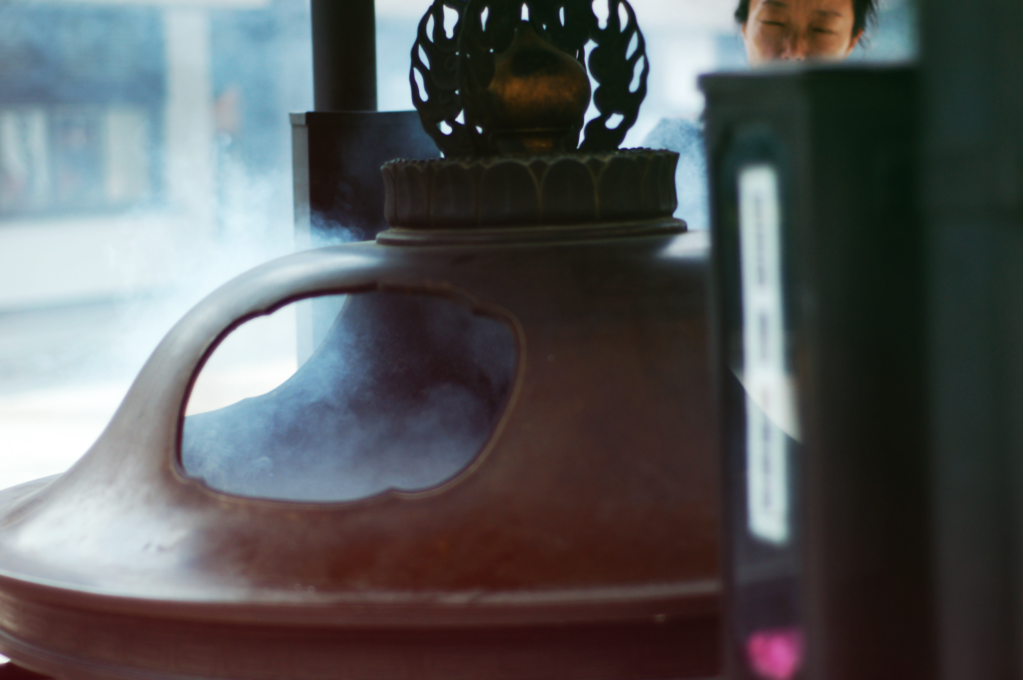
The entrance to Buddhist temples is often marked by a huge incense brazier (kōro, 大香炉), which is always surrounded by people lighting the colorful bundles of incense, fanning the smoke towards their faces and then inhaling it ―this is one of the rituals of purification one must perform before entering the temple.
In this picture, my lovely host performs the ritual at Rinno-ji Temple.
Monday, 16 November 2009
X - Nikko
The temple complex of Rinno-ji (or Rinnoji, 輪王寺) sits on top of one of the hills surrounding the town of Nikko, and can be reached by climbing a long flight of stairs meandering though the forest. Although the climate in this area is usually cool, it can turn quite tropical during August ― the cold water of fountains like this one gives such a relief from the heat!
Subscribe to:
Posts (Atom)