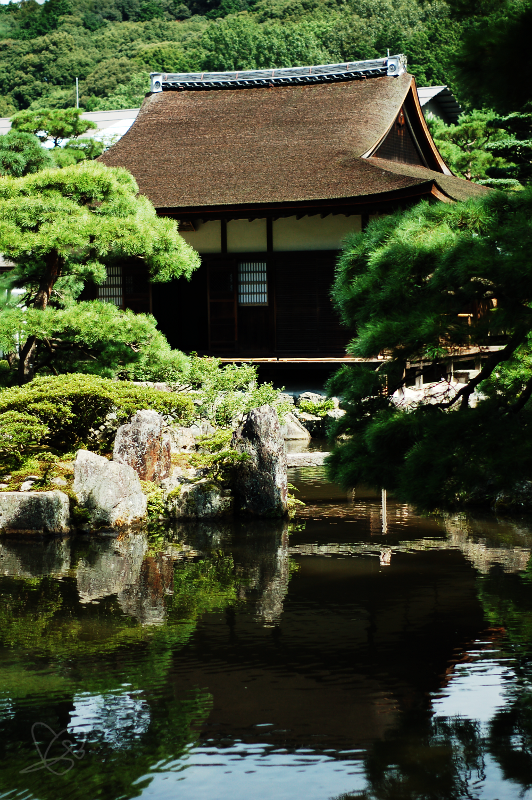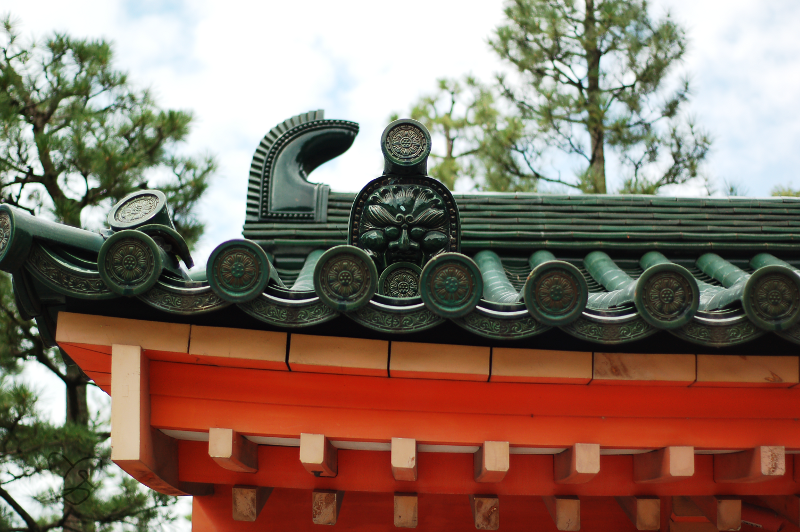
The elaborate roof of one of the buildings in the Heian Jingu complex.
Monday, 17 January 2011
Saturday, 15 January 2011
CXXXIII - Kyoto
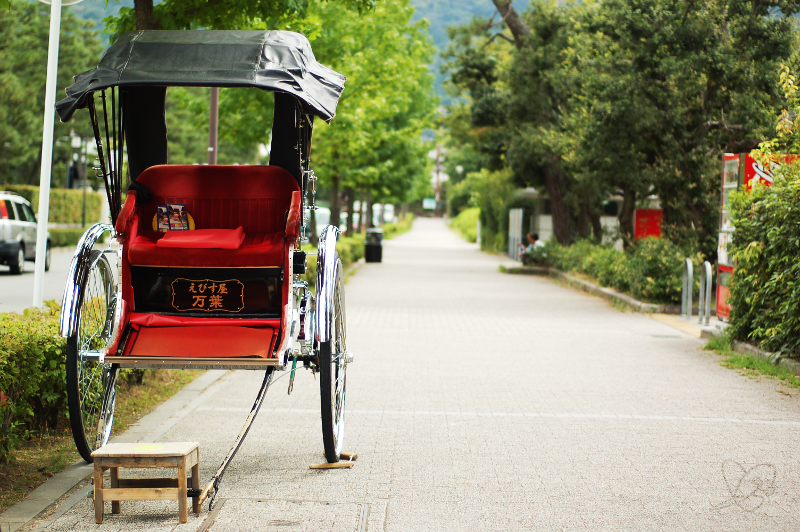
A pretty red jinrikisha (人力車, "rickshaw") outside Kyoto's famous , Heian jingū (平安神宮, "Heian shrine").
~~~
This is my entry for the 9th edition of Show Me Japan. Please check it out!
~~~
This is my entry for the 9th edition of Show Me Japan. Please check it out!

Saturday, 8 January 2011
Wednesday, 5 January 2011
Monday, 3 January 2011
Sunday, 2 January 2011
CXXIX - Kyoto
Inside the Togu-do there is a wooden statue of Ashikaga Yoshimasa (足利 義政; 1435 – 1490), the shogun who built this property as a retirement villa, and arranged for it to become a Zen temple after his death. According to legend, the shogun carved the statue himself.
This building also contains a small room known as the Dojin-sai, which is a tea room believed to be the reference for all future tea room designs, personally designed by the shogun's tea master, Murata Shuko (村田珠光; 1423 – 1502).
Friday, 31 December 2010
Thank you
To those 1030 people who visited my blog, whoever you are..
THANK YOU!
I hope you've enjoyed my photos and have found the explanations somewhat interesting or useful, I'll do my best this coming year to post more regularly!
Please don't hesitate to leave comments, suggestions, thoughts.. they're always very much appreciated!
Happy New Year!
よい お年 を!☆
Thursday, 23 December 2010
CXXVIII - Kyoto
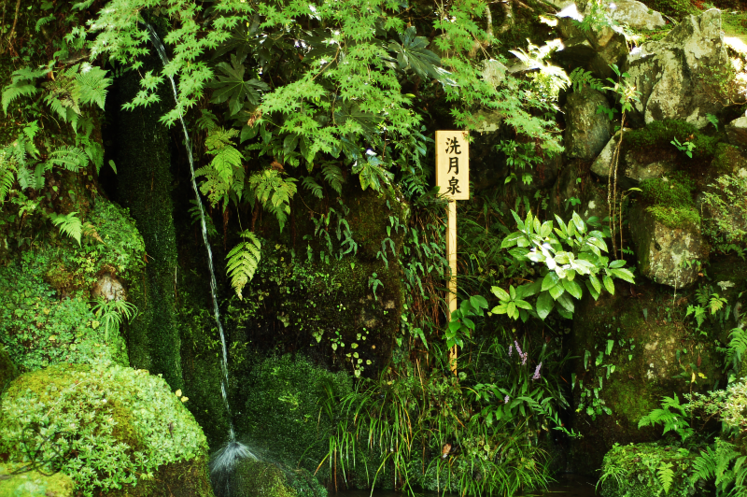
This small charming waterfall is called Sengetsu-sei (洗月泉- "moon watching fountain") because the small trickle of water is designed to create ripples which run across the water of the pool below, pleasantly distorting the silver reflection of the full moon.
CXXVII - Kyoto
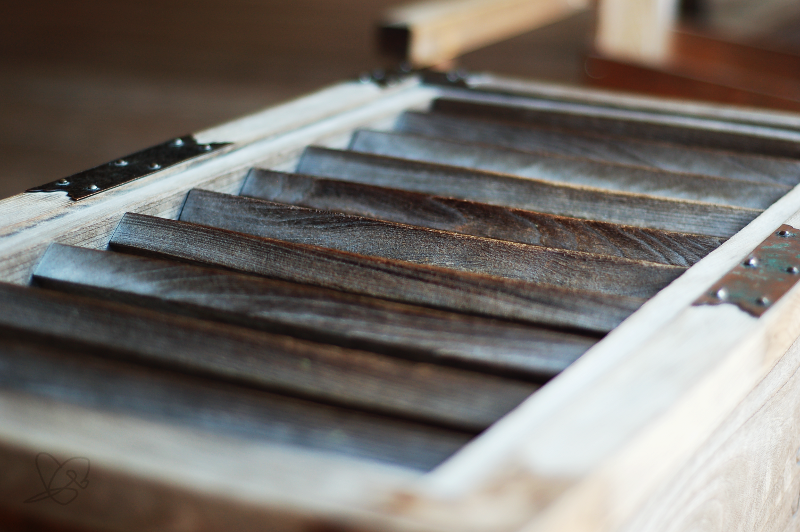
A saisen bako (賽銭箱, "offerings box").
Always located in front of a shrine, it is used to collect money that worshippers wish to offer, and the noise of the coins hitting the wooden bottom is believed to attract the kami (神, "spirits"), who will then listen to the worshipper's prayer.
Subscribe to:
Posts (Atom)